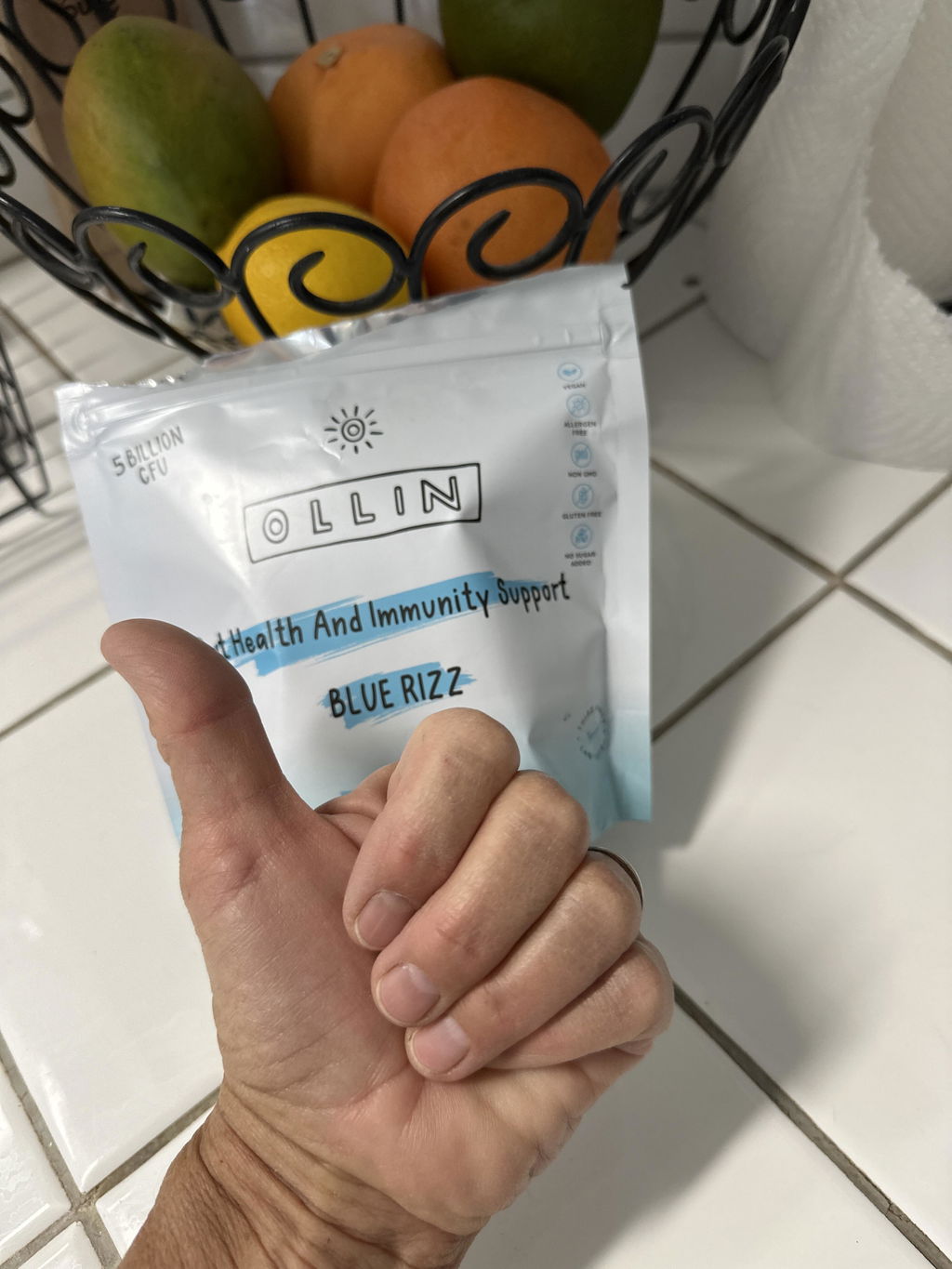
Probiotic Blend (14 Strains = 5 Billion CFU)
Includes:
L. acidophilus, L. rhamnosus, L. reuteri, L. fermentum, L. gasseri, L. brevis, L. jensenii, L. plantarum, L. crispatus, L. salivarius, L. paracasei, L. sakei, L. debreuckii, B. bifidum
Why it’s special:
• Diversity: 14 strains = broad coverage for gut, skin, respiratory, and immune benefits.
• Clinical stars:
• L. rhamnosus – best-studied for reducing childhood diarrhea and antibiotic-associated tummy upset.
• L. reuteri – helps reduce colic and supports oral health.
• B. bifidum – early-life strain supporting digestion of milk sugars and immune balance.
• Synergy: Together they crowd out bad bacteria, create short-chain fatty acids (SCFAs) like butyrate, and train the immune system to respond properly—not overreact.
Evidence Summary:
Probiotic Strains & Pediatric + Adult Gut Health
Ollin Reference (2025) — Focus on species present in Ollin: 13 Lactobacillus + Bifidobacterium bifidum
Lactobacillus acidophilus
• Ouwehand AC et al., 2018. Beneficial effects of multi-strain probiotics containing L. acidophilus on GI health: A review. Beneficial Microbes. Demonstrated improved stool frequency and reduced bloating; synergistic effects in blends.
• Sazawal S et al., 2010. Br J Nutr. RCT in preschool children: multi-strain formula with L. acidophilus reduced diarrhea incidence.
• Ishikawa H et al., 2003. Intestinal microbiota improvement with L. acidophilus blends. Adults with IBS saw mild symptom relief.
📍Takeaway: Consistent digestive-support and gut comfort data; safe and well tolerated in both kids and adults.
⸻
Lactobacillus rhamnosus
• Isolauri E et al., 2000. J Allergy Clin Immunol. L. rhamnosus adjunct reduced eczema severity and immune reactivity in infants.
• Goldenberg JZ et al., 2015. Cochrane Review. Broad reduction in antibiotic-associated diarrhea across trials.
📍Takeaway: L. rhamnosus is one of the most studied species for immune and GI balance, especially in children.
⸻
Lactobacillus reuteri
• Savino F et al., 2010. Pediatrics. Colic-focused RCT: L. reuteri reduced crying time in breastfed infants.
• Indrio F et al., 2014. JPGN. Preventive L. reuteri use improved GI motility and stool frequency.
• West CE et al., 2009. Clin Exp Allergy. Pediatric supplementation improved gut microbiota diversity and immune markers.
📍Takeaway: L. reuteri consistently supports infant comfort and gut motility, making it ideal for kid formulations.
⸻
Lactobacillus plantarum
• Ducrotté P et al., 2012. World J Gastroenterol. Reduced abdominal pain and bloating.
• Zhang L et al., 2021. Front Nutr. Meta-analysis: L. plantarum significantly increased fecal short-chain fatty acids and improved barrier function.
📍Takeaway: Excellent adult digestive support; mechanistic data shows SCFA (butyrate) promotion.
⸻
Bifidobacterium bifidum
• Allen SJ et al., 2010. Cochrane Review. B. bifidum-containing probiotics shortened diarrhea duration in children.
• Scalabrin DMF et al., 2009. JPGN. Infant formula with B. bifidum improved stool regularity and microbiota composition.
• Ouwehand AC et al., 2008. Benef Microbes. Adults with IBS saw improved stool form and less bloating with B. bifidum blends.
📍Takeaway: One of the most validated pediatric species for stool and microbiome normalization.
⸻
Lactobacillus paracasei
• Shida K et al., 2017. Br J Nutr. L. paracasei (Shirota-type) reduced cold/URTI incidence in adults.
• Holscher HD et al., 2012. J Nutr. L. paracasei improved immune cell activity and reduced gut inflammation markers.
• Wang B et al., 2023. Front Nutr. Review: L. paracasei supports mucosal immunity and barrier integrity.
📍Takeaway: Immune-defense support species; pairs well with zinc and vitamin C.
⸻
Lactobacillus fermentum
• Maldonado Galdeano C et al., 2019. Front Immunol. Review of L. fermentum’s anti-inflammatory and gut barrier benefits.
📍Takeaway: Anti-inflammatory